Education
Special Collections
Explore Educational Programs at Pequot:
Books For Teachers Children’s Library Schools & Educators Educator ResourcesK-12 Educational Programs
Passport to Pequot
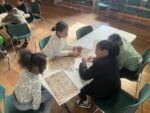
Exhibition Tours Pequot Library’s school programs integrate our Special Collections of rare books, manuscripts, and archives into interactive tours and workshops that support teachers by aligning with Connecticut Core Standards. Students tour our exhibitions to examine the primary source materials on display, and participate in hands-on activities that allow them to actively engage with what they’ve learned.
Custom Programs
- Programs are offered Monday-Friday, 10 a.m. to 2 p.m.
- Please schedule 2-3 weeks in advance.
- Lunch space is available upon request.
- Handicapped accessible.
- 1 adult per 10 students required.
- $5 per student
- No charge for group leaders and chaperones
- No charge for Title 1 schools. Bus subsidies are available upon request.
The Tinderbox of the Civil War
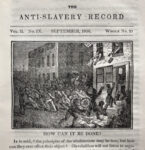
1830s Abolitionism in Connecticut: On view through May 10, 2025
The 1830s witnessed the emergence of abolitionism: the interracial political and social movement that demanded an immediate end to slavery in the United States. Remarkably ahead of its time, the movement also sought legal rights and integration for free Blacks and the formerly enslaved, putting it at odds with many Americans and with the colonization movement, which sought the emigration of Blacks to Africa. Through anti-slavery societies, publications, lectures, and legal channels, abolitionists forced the controversial topics of slavery and integration into the open, provoking derision and mob violence, but also launching the movement that would ultimately lead to emancipation.
Drawing from a robust anti-slavery collection recently cataloged in Pequot Library’s Special Collections, The Tinderbox of the Civil War features publications from Connecticut that illustrate both sides of the debate, including the Charter Oak anti-slavery newspaper, Catherine Beecher’s letter to abolitionist Angelina Grimké, and reports from the trials of educator Prudence Crandall and the Amistad captives. This exhibition invites viewers to reflect on the legacy of these brave men and women and to consider how their activism can continue to inspire.
School Program:
In a docent-led tour of the exhibition and primary source analysis activities, students will learn about the abolitionists who organized to challenge the institution of slavery in the 1830s, their formation of the American Anti-Slavery Society and other state and local societies as reactions against the American Colonization Society, and how Northern abolitionists challenged racial inequality during the Antebellum Period.
8.HIS.3.a, 8.HIS.12.a, 8.His.12.b, 8.Civ.14.c, 8.Inq.3.a, 8.Inq.3.b, CCSS.ELA-Literacy.RH.6-8.1, CCSS.ELA-Literacy.RH.6-8.2
Early American Children’s Books and the Shaping of National Identity
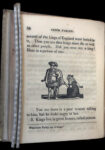
Semi-permanent Exhibition: March 10 – May 22, 2025
The 18th and 19th centuries witnessed the emergence in England and America of new attitudes toward children and education at the same time that America was casting off its royal authority. The result was a booming market of print materials that, for the first time, contained text and illustrations geared toward a young audience. This exhibition draws from Pequot Library’s extraordinary Children’s Historical Collection to explore how children’s books published in the years following American independence reflect the changing political, economic, and social climate of the young nation.
School Program:
In a docent-led tour of the exhibition, fifth grade students will explore what the early American children’s books on display reveal about a developing American national identity around the time of the Revolution. They will participate in an art project that simulates the techniques used to illustrate books in the 18th century and read early-American children’s books by flickering LED “candle” lights to compare how even a task that we take for granted, like reading at night, was different at the time these books were published. 5.His.6.a, 5.His.10.a, 5.Civ.14.a
Passport to Pequot Library is made possible in part by grant support.